





POSTED ON25.11.2026
Back to the roots: the Escuela Bolera comes to Russian Masters Ballet's winter course
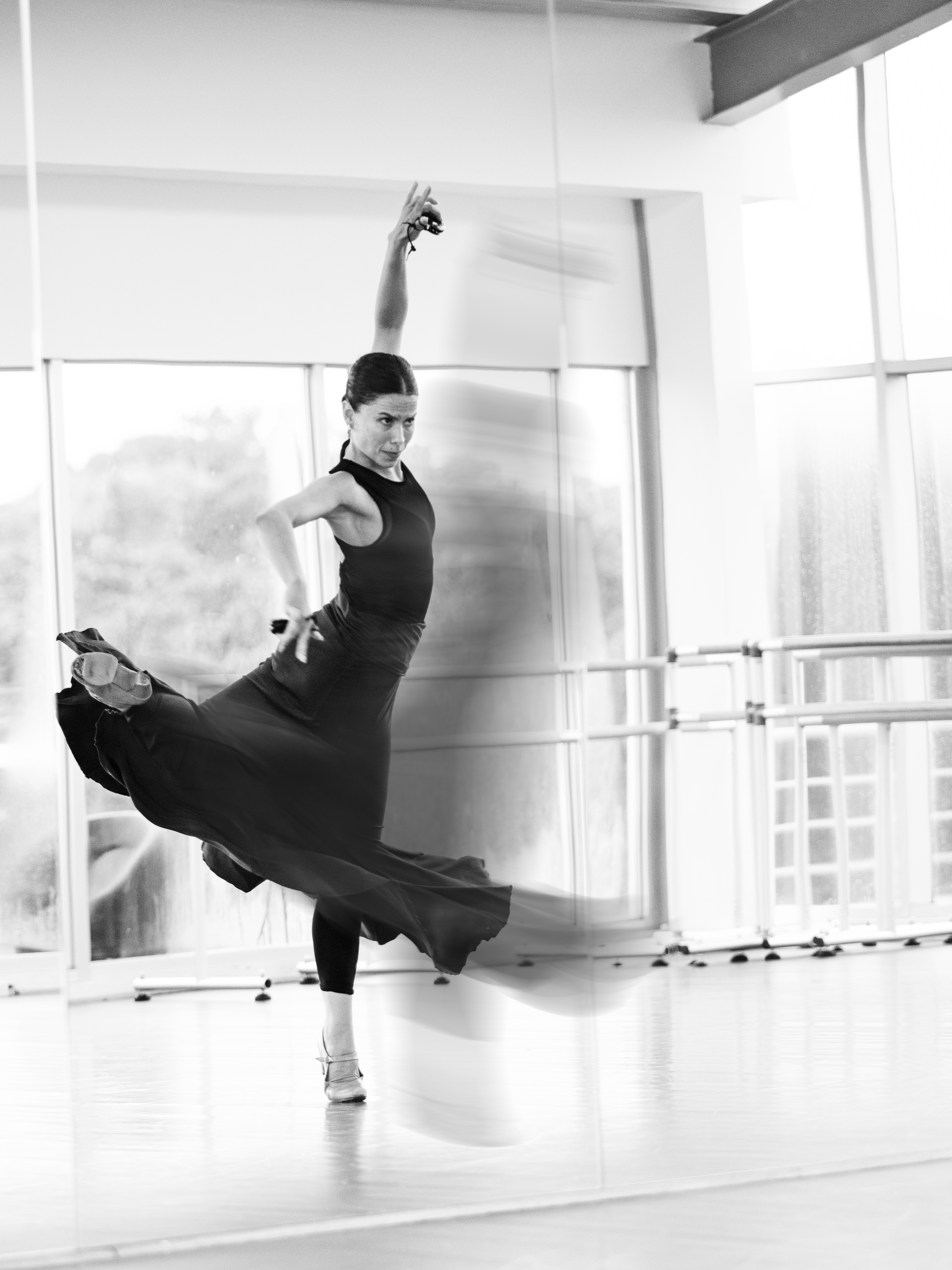
This year, the Russian Masters Ballet Madrid Winter Intensive (26–30 December 2026) welcomes a very special guest: Estela Alonso, soloist of the Ballet Nacional de España and one of today's leading specialists in the Escuela Bolera.
An artist devoted to the Escuela Bolera
Estela Alonso (Madrid, 1991) has been a member of the Ballet Nacional de España since 2015, performing principal Escuela Bolera roles. Her study, research and creative work on this discipline, its origins and its links with flamenco have led to her own productions, including A mi manera 2.0, premiered at the Suma Flamenca Festival in Madrid, and Aquellas que habitan en mí (Teatros del Canal, 2025).In 2025 she received the Breakthrough Artist Award at the Festival de Jerez. She has appeared as a guest artist at international galas in Menorca, Madrid, Phoenix and Santo Domingo, and has taken the Escuela Bolera to flamenco tablaos across Spain.
Why the Escuela Bolera in a classical ballet course
At Russian Masters Ballet, we always want to give our students something authentic: to go back to the roots of dance, so they can understand it more deeply and pass it on better.In Russian classical training, one of the core subjects is character dance. Most of the classical ballets we know today were created by Marius Petipa — and Petipa lived and worked in Spain for several years, where he fell in love with its dances.
At that time, Spanish dance was moving onto the stage, shaping what we now call stylised Spanish dance. Meanwhile, classical ballet arriving from France and Italy "picked up the castanets": classical technique in the legs, Spanish character in the upper body and arms. From this fusion the Escuela Bolera was born — a repertoire that flourished for a relatively short period and has survived to this day.
When Petipa created his great ballets in Russia, every one of them included character dances from different countries — and always a Spanish dance. That Spanish character dance carries the spirit of Spain, but not everything in it is accurate. This is why we invite artists like Estela Alonso: so our students can truly understand that character at its source.
"We always want to give our students something authentic: to go back to the roots, to understand dance as fully as possible and to pass it on better." — Asiya Lukmanova, Director of Russian Masters Ballet
An extremely demanding technique
One of the most famous Escuela Bolera dances is the Cachucha, which the great ballerina Fanny Elssler made famous worldwide in the 19th century. It demands extraordinary coordination: dancing and playing the rhythm on the castanets at the same time, with very fine, clean, classical footwork and many turns. It is danced in soft shoes.
"The Escuela Bolera is extremely difficult: you have to dance and keep the rhythm with the castanets at the same time, with very fine, clean, classical footwork." — Asiya Lukmanova
A unique opportunity for our students to discover the Spanish roots of the great classical ballets, guided by a soloist of the Ballet Nacional de España.
Madrid Winter Intensive · 26–30 December 2026
Registration: https://russianmastersballet.com/pages/registration-for-intensives/
Instagram: @estelaalonso26


